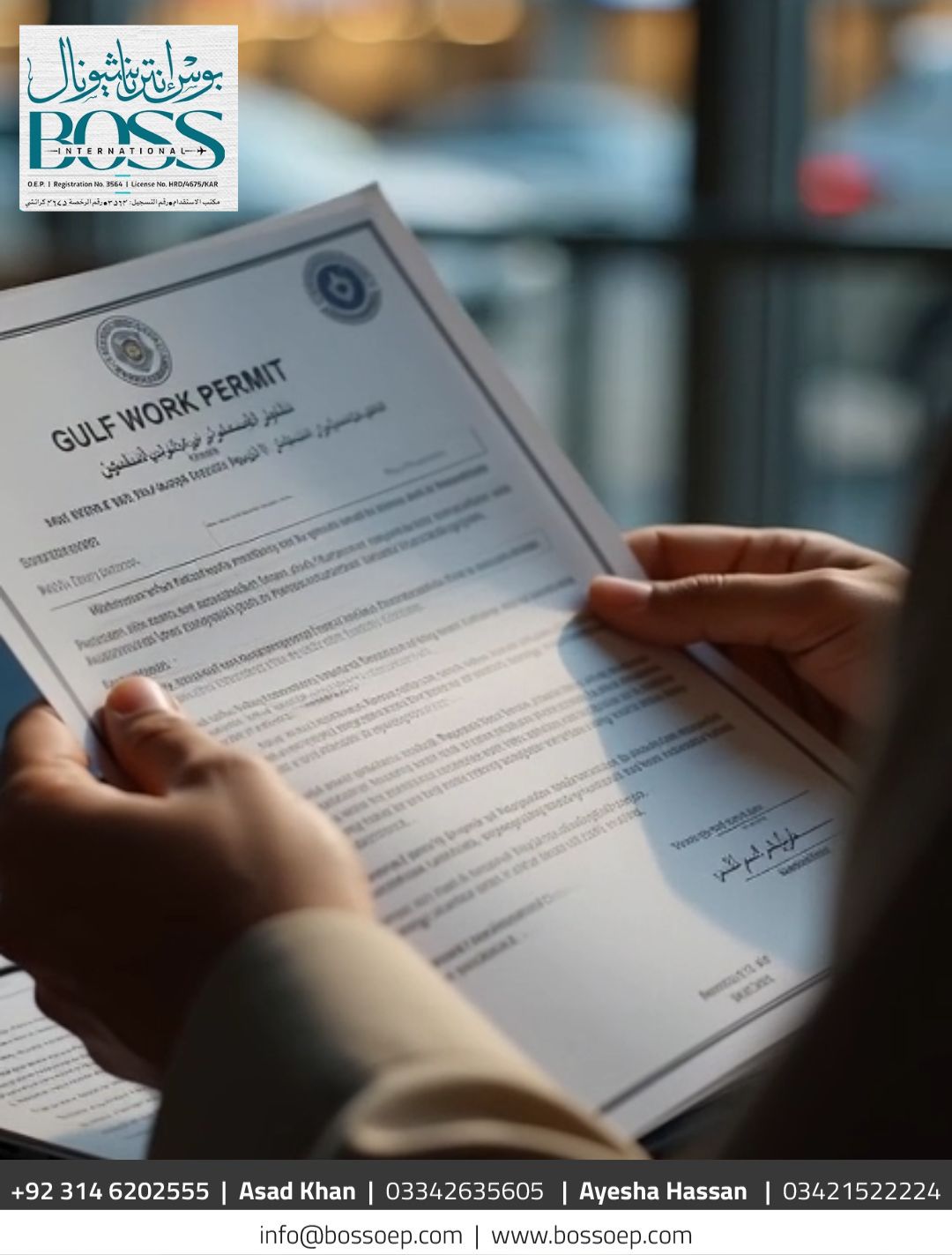
A Gulf work permit for Pakistani workers has become one of the most sought-after opportunities for people looking to improve their income and career growth. Thousands of Pakistanis travel every year to Gulf countries because of better salaries, job security and a stable working environment. Many industries such as construction, healthcare and hospitality continue to hire skilled and unskilled workers from Pakistan due to high demand.
The region offers attractive benefits like accommodation, transportation and medical coverage, making it a preferred option for overseas employment. For many families, a Gulf job becomes a long-term path toward financial stability, career development and a brighter future in overseas jobs, foreign employment, visa process, labor market, Middle East jobs.
Understanding the Gulf Work Permit for Pakistani Workers
A Gulf work visa from Pakistan allows you to live and work legally in the UAE, Qatar, Saudi Arabia, Oman, or Kuwait. When you apply for work visa, you enter a structured system that evaluates your skills, documents, and health. A genuine job offer letter and verified visa sponsorship build your foundation for safe and legal employment.
Most Pakistani workers choose the Gulf because countries like Saudi Arabia and Qatar offer long-term contracts, low taxes, and strong job markets. Boss International helps applicants avoid wrong information so they reach reliable employers. Every worker must understand the difference between a simple entry permit and a long-term residency permit such as Iqama or Emirates ID before planning their journey.
Understand Your Visa Type before Starting the Process
Understanding How to apply for a Gulf work permit for Pakistani workers begins by choosing the correct visa category. The Gulf provides different pathways such as Employment visa Gulf, company-sponsored permits, and long-term residency options. Each country uses different rules, yet all require a valid sponsor, clean record, and proper medical clearance. Workers must never confuse visit visas with job-based entry permits.
It helps to decide your preferred destination such as Saudi Arabia or the UAE because each country demands different paperwork and processing timelines. A Saudi Arabia work visa includes contract verification and electronic approval, while a UAE work visa requires an online application and security checks. Choosing correctly prevents delays and supports smooth travel.
Key Differences between Employment Visa, Work Permit, and Company-Sponsored Visa
An employment visa gives you entry, while a work permit allows actual employment. Company-sponsored visas include direct approval from the employer, which often speeds up the process. Pakistanis traveling to Qatar or Kuwait must also understand project visas that only allow working for registered companies.
Required Documents for Gulf Work Visa
A complete file makes your Gulf work visa application strong. You need a valid passport, biometric photos, police clearance, and all attested certificates related to your field. The job contract must match the employer’s information. Workers applying for Qatar or Oman also require country-specific security checks, so submitting every document early keeps the timeline smooth.
Most employers request additional medical and security papers before sponsorship approval. They may verify your passport history or cross-check your employment background. Workers should never submit fake certificates because Gulf countries run strict digital verification systems. Authentic papers protect you from permanent bans and ensure a legal future in the region.
Medical Test Requirements
Your medical test GAMCA clearance proves your fitness for work. Every Pakistani worker heading to the Gulf must visit a GAMCA-approved or WAFID center for tests such as chest X-rays, blood screening, and infectious disease checks. Without this clearance, your visa application process cannot move forward. Many applicants schedule the medical too late which causes delays.
Countries like Qatar and Kuwait only accept medical certificates issued within a specific validity period. Workers must keep copies because employers often request them again during contract stamping. Passing the medical ensures you reach the Gulf without unexpected issues at immigration or during employer verification.
Submitting Your Application through the Right Channel
Submitting your application correctly increases your chances of approval. When applying for How to apply for a Gulf work permit for Pakistani workers, you may use embassy channels, employer portals, or a trusted recruitment agency like Boss International. Each Gulf country processes visas differently, so using wrong channels can waste time. Online submission often requires uploading clean, high-resolution documents.
Some workers prefer agencies because they handle contract verification and employer validation. Direct applications are possible for workers already selected by companies, but inexperienced applicants often need guidance. Every submission must match the job contract information because Gulf immigration departments check employer IDs carefully.
Application Tracking & Follow-Up
After submission, tracking your visa gives you peace of mind. Websites in Saudi Arabia, UAE, Qatar, and Kuwait show real-time updates on approval, security checks, and contract stamping. Workers checking status frequently avoid misunderstandings with employers. Many applicants forget follow-up which slows down the sponsor’s final approval.
Tracking helps identify delays from expired documents or mismatched information. Gulf immigration systems update quickly, so stay alert. A proper follow-up routine ensures your application remains active and prevents automatic cancellation due to long inactivity. Keeping your sponsor updated builds trust.
After Visa Approval: What to Do Before Traveling
Once approved, complete your pre-departure checklist carefully. You must secure your ticket, finalize your protector stamp, and confirm accommodation details shared by your employer. The residency permit process begins once you arrive in the Gulf, so carry all original documents. Workers heading to Saudi Arabia must sign entry approval letters before departure.
Make sure your passport is valid for at least six months. Double-check your job offer letter and keep printed copies. If you’re flying to the UAE or Qatar, immigration officers may ask about your employer or job role. Staying confident and organized helps avoid offloading.
Latest FIA Travel Policy for Pakistanis Traveling Abroad on Work Visas
FIA confirms that no new affidavit or additional permission is required for workers holding verified employment visa documents. Pakistani travelers must carry their original passport, job contract, medical reports, and protector slip. Officers check only for authenticity, not extra conditions. Having complete documents prevents delays at immigration counters.
Offloading occurs when applicants fail to provide genuine information or carry mismatched paperwork. Workers traveling for the first time should prepare their employer contact details in case officers ask for verification. FIA continues to support Pakistani workforce heading to the Gulf because legal labor migration benefits the national economy.
Airport Requirements and Key Documents to Avoid Offloading Cases
Immigration officers may confirm your employer name and destination address. Carry your employment contract, medical fitness certificate, sponsor details, and protector receipt. Confident answers prevent unnecessary delays.
Types of Work Permits for Pakistani Citizens
Pakistani workers choose from skilled, semi-skilled, and labor categories when applying for the Gulf. Skilled permits suit electricians, technicians, and drivers, while semi-skilled roles suit machine operators or helpers. Labor permits support construction and hospitality workers. Each category has different medical and security needs which influence processing speed.
Free zone visas in UAE offer more flexible employment conditions. Project visas in Saudi Arabia tie workers to fixed contracts. Understanding these categories helps applicants choose the best future path. Boss International guides applicants toward roles that match their experience and long-term career plans.
Eligible Countries Where Pakistanis Can Apply for Work Permits
The Gulf includes powerful job markets like Saudi Arabia, UAE, Qatar, Oman, and Kuwait. Each country provides structured pathways for Pakistani workers based on experience and demand. Pakistani workers Gulf migration continues rising because these nations invest in construction, aviation, logistics, and service sectors.
Workers choosing Saudi Arabia often receive long-term contracts under Iqama. UAE offers digital systems for faster processing. Qatar invests heavily in infrastructure, and Kuwait provides stable jobs in energy and healthcare. Each path requires careful planning and complete paperwork.
Gulf Countries Offering High-Demand Jobs for Pakistanis in 2025
Saudi Arabia demands drivers, technicians, welders, and construction teams. The UAE seeks cashiers, hotel staff, and logistics workers. Qatar focuses on stadium operations and civil work. Kuwait needs engineers and skilled labor for oil and gas.
Common Mistakes Pakistanis Make During Work Visa Application
Applicants often rush the process without verifying their recruitment agency, which leads to fraud. Using fake documents or skipping medical checks causes permanent bans. Many applicants misunderstand their job roles and accept unclear contracts, creating problems after arrival. Reading the job contract carefully prevents exploitation.
Some workers submit incomplete papers or ignore embassy instructions. Others choose unregistered agencies promising unusually high salaries. A legal application requires patience and accuracy. Workers who follow official guidelines enjoy safe travel and secure employment in the Gulf.
Tips to Get a Work Visa Quickly
A strong professional profile increases your chances of receiving fast approval. Adding skill certificates, trade tests, and verified training shows employers that you’re ready for Gulf roles. Many workers complete short courses in plumbing, HVAC, or driving before applying. These skills help speed up your Gulf entry.
Understanding market demand also helps. Saudi Arabia and UAE hire more drivers and technicians, while Qatar focuses on hospitality. Applying during peak hiring seasons improves your chances. Keeping your passport updated and documents ready ensures faster evaluation by employers and immigration authorities.
Why You Should Use Only Verified Overseas Agency
Boss International protects Pakistani workers from scams while helping them complete every step correctly. They check employers, validate contracts, and assist with paperwork. Many applicants avoid legal problems by using trusted channels that follow government rules.
Verified agencies maintain strong connections with companies in the UAE, Qatar, Kuwait, and Saudi Arabia. This increases job placement chances and prevents fraud. Applicants also receive support during medical tests and protector office visits which reduces stress and confusion.
Your Work Visa Is the First Step toward Your Future
Securing a Gulf work permit opens the door toward financial stability and long-term growth. Workers across Pakistan improve their families’ lives by taking opportunities in Saudi Arabia, Qatar, Kuwait, and the UAE. Every approved visa brings you closer to stable income and better prospects. Your career begins when you follow the correct steps.
Planning each stage carefully avoids mistakes and protects your future. Understanding rules, verifying your employer, and completing your medical exam ensures a stress-free journey. The Gulf rewards hard work, so secure your permit with confidence and begin building a successful career.
Building a Stable Career in UAE, Kuwait, Qatar, and Saudi Arabia
These countries offer skilled and non-skilled positions with stable salaries and long-term benefits. Workers gain experience in construction, hospitality, logistics, and engineering which supports career growth.
Need Help? Apply for Your Work Visa or Hire Skilled Pakistani Workers Today
Workers seeking guidance can contact Boss International. Our team helps applicants finish documents, pass medical checks, and complete departure formalities. Employers looking for Pakistani talent can also reach out to hire trained and reliable teams for Gulf operations.
Connecting workers with legal job offers strengthens Pakistan’s workforce abroad. If you want to secure your Gulf permit or hire skilled staff, professional support ensures compliance with immigration rules. Your journey becomes easier when handled by experts who understand every step of the Gulf system.
Frequently Asked Questions
How can Pakistani workers apply for a work permit in UAE, Kuwait, Qatar, or Saudi Arabia?
Pakistani workers must first secure a job offer from a licensed employer, after which the employer applies for the work permit, and the worker completes medical tests and visa stamping in Pakistan.
What are the eligibility requirements for Gulf work visas for Pakistanis?
Applicants must have a valid passport, a confirmed job offer, required qualifications or skills, a clean police record, and must pass medical and biometric checks.
Is a work permit required for Pakistani citizens to work in the Gulf countries?
Yes, every Pakistani worker needs a valid work permit and residence visa issued by the hiring country before legally starting employment.
What documents are needed for a work visa from Pakistan to Saudi Arabia or UAE?
A valid passport, job offer or visa approval, employer contract, medical certificate, biometric verification, passport-size photos, and an attested degree or skill certificate if required.
How long does it take to get a Gulf work permit for Pakistani workers?
Processing usually takes 2 to 6 weeks, depending on the country, employer speed, medical test completion, and embassy workload.